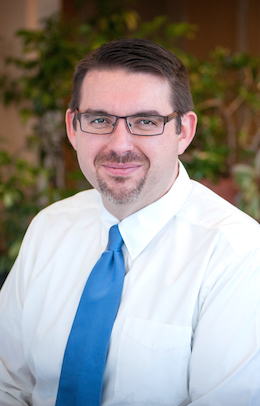
My primary job is teaching general and physical chemistry at Skidmore College. Along with this -
- I am implementing a new highly-structured approach to teaching general chemistry, with an aim towards building engagement, motivation and improving learning.
- I develop new approaches to teaching physical chemistry, included flipped classroom and guided-inquiry labs.
- I am active with our non-tenure track faculty union, as a member of the negotiating committee and serving as chief steward. Skidmore Faculty Forward
Other interests I've had in the past
- I developed and supervised a Peer-Led Team-Learning program in general chemistry.
- I served the Eastern New York section of the American Chemical Society as Education chair for about 10 years, where I help promote and coordinate activites like Chemistry Olympiad and Project SEED.
- I worked with the physical chemistry exam committe of the ACS Exams Institute (2017-2021), where I helped write standardized exams that all chemistry students yearn to experience.
My research speciality is theoretical and computational chemistry. I solve chemistry problems by deriving formulas and calculating things (with my own, or someone else's, software). In practical terms, I use math and computers instead of flasks and rotovaps.
Teaching
My main experience is teaching general chemistry (lecture and lab), but at times as well physical chemistry (quantum mechanics) (lecture and lab) and calculus.
At Skidmore, general chemistry is Principles of Chemistry (CH125), a fast-paced atoms-first general chemistry course that covers most of the material that other colleges require two semester-long courses to complete. Its a fun teaching challenge because we allow many students to start their college chemistry learning with this course. The audience in CH125 has diverse backgrounds and interests. And many of them never thought chemistry was interesting before CH125!
I like bringing computational chemistry into the undergraduate curriculum. I have strengthened the role of computational chemistry in the physical chemistry courses at Skidmore. In collaboration with Jodi O'Donnell, an inorganic chemist at Siena College, we developed a computational chemistry activity where students learn how to construct their own Walsh diagrams and understand molecular orbital-molecular geometry relationships for the inorganic chemistry curriculum. A paper describing the activity and the confusion about Walsh diagrams in the research and pedagogical literature was published by The Chemical Educator.
Prior to Skidmore, I taught general chemistry at Siena College. I also taught general chemistry at University at Albany (SUNY) in a 300+ student lecture format, and as well graduate-level courses in quantum chemistry and statistical thermodynamics.
Research
I advise and attempt to control a group of Ѕkidmore students researching the photochemistry of tryptophan using quantum calculations and molecular dynamics simulations. Biochemists use Trp as a fluorescent probe since its quantum excited state structure is highly sensitive to its environmennt---solvent and nearby residues. Can we predict Trp's absorption and emission wavelength? Intensity? Will it photobleach? How are all these properties affected by the molecular environment? How do conical intersections mediate the photochemistry? Chiefly we use Gaussian and computing time at the San Diego Supercomputing Center, thanks to support from the XSEDE project.
Students working on this research learn to use computational chemistry software to calculate molecular properties that would otherwise by difficult and expensive to determine experimentally. If you're a Skidmore student interested in this type of research, come by and chat. I am interested in working with students of any year who want to learn more about chemistry, physics, math, and computers. Students working with me have been chemistry, biology, math, and computer science majors.
I was a graduate student at the Chemistry and Chemical Biology Department of Cornell University, working with Greg Ezra on the quantum and semi-quantum mechanics of rigid rotating molecules in electric fields. I completed my dissertation in the summer of 2005. Generally, my coursework concentrated on chemical physics (quantum mechanics, statistical mechanics, thermodynamics, classical dynamics) and applied mathematics (including differential geometry and computational physics).
Publications (peer-reviewed)
(undergraduate co-authors underlined)- Andrea N. Giordano, David Gardner, William W. Kennerly, and Chrystal D. Bruce, "Conversation among Physical Chemists: Strategies and Resources for Remote Teaching and Learning Catalyzed by a Global Pandemic", <
J. Chem. Educ. 98, 2228–2235, 2021 - William W. Kennerly, Kimberley A. Frederick, and Kelly Sheppard, "General Chemistry in Just One Semester for All Majors", <
J. Chem. Educ. 97, 1295–1302, 2020 - W. W. Kennerly, K. B. Billings, A. G. Geragotelis, J. L. O'Donnell, "A computational approach to Walsh correlation diagrams for the inorganic chemistry curriculum",
Chem. Educator 17, 57–63, 2012 - Y. Xue and W. W. Kennerly, "Quantum trajectory analysis of single-photon control from a single-molecule source",
J. Chem. Phys. 128, 054104, 2008 - C. A. Arango, W. W. Kennerly, and G. S. Ezra, "Semiclassical IVR approach to rotational excitation of nonpolar diatomic molecules by nonresonant laser pulses",
Chem. Phys. Lett. 420, 296–303, 2006 - W. W. Kennerly, "Molecules rotating in electric fields by quantum and semi-quantum mechanics"
Ph.D. Dissertation, Cornell University, 2005 - C. A. Arango, W. W. Kennerly, and G. S. Ezra, "Quantum and classical mechanics of diatomic molecules in tilted fields",
J. Chem. Phys. 122, 184303, 2005 - C. A. Arango, W. W. Kennerly, and G. S. Ezra, "Quantum monodromy for diatomic molecules in combined electrostatic and pulsed nonresonant laser fields",
Chem. Phys. Lett. 392, 486–492, 2004